Digital resources
Dev diary of our survival game: what we have learned
Real development lessons from our survival game (title to be announced): an ugly but playable first build, flaws found by hand, and style changes.
Published on 3 min read
Our survival game (title to be announced) is in development. It has no release date, no final name, and its art style may still change. Instead of showing a finished game that does not exist, here is what making it has taught us so far. Everything comes from the project's working log.
The starting point
The project is an action survival game of the "survivors" kind (a roguelike where you move a character, spells fire on their own and you pick upgrades as you level up). The hero is a cat, a witch's familiar, in a dark world. The starting decision was to set two older games aside to focus on a single one, and to choose Unity as the engine.
Lesson 1: an ugly first build, but a playable one
The first playable build had a flat background, a placeholder cat inherited from an older game, rats, bats and a green bramble circle. It was not pretty. But it could be played from start to finish, and that was what mattered: we could judge right away the pleasure of moving, the power curve and the difficulty, without waiting for the graphics.
If you are making a game, this is the easiest lesson to apply: let someone play before you make it pretty.
Lesson 2: a human test finds what bots do not
To balance the game, we use bots that play thousands of games. Yet one flaw slipped past them: standing still with the Bramble circle was enough to win. It was found by playing a single game by hand.
The resulting decision became a design rule: standing still must never be stronger. Brambles now only hurt when the cat is walking (when it stops, they retract), and enemies arrive from both sides. We then added bots for every tactic, including a bot that learns on its own. Bots measure a lot of things, but not fun, and not the twisted ideas of a human.
Lesson 3: lose the level pacing and you lose the cards
One of the mistakes noted in the log: levels came too fast. Everything was maxed out around 9 minutes, so there were no cards left to pick afterwards. The rhythm of choices (a level every 30 to 40 seconds, 1 card out of 3) is the core of the game: if it collapses, the game becomes waiting.
Lesson 4: changing style is expensive, and we did it several times
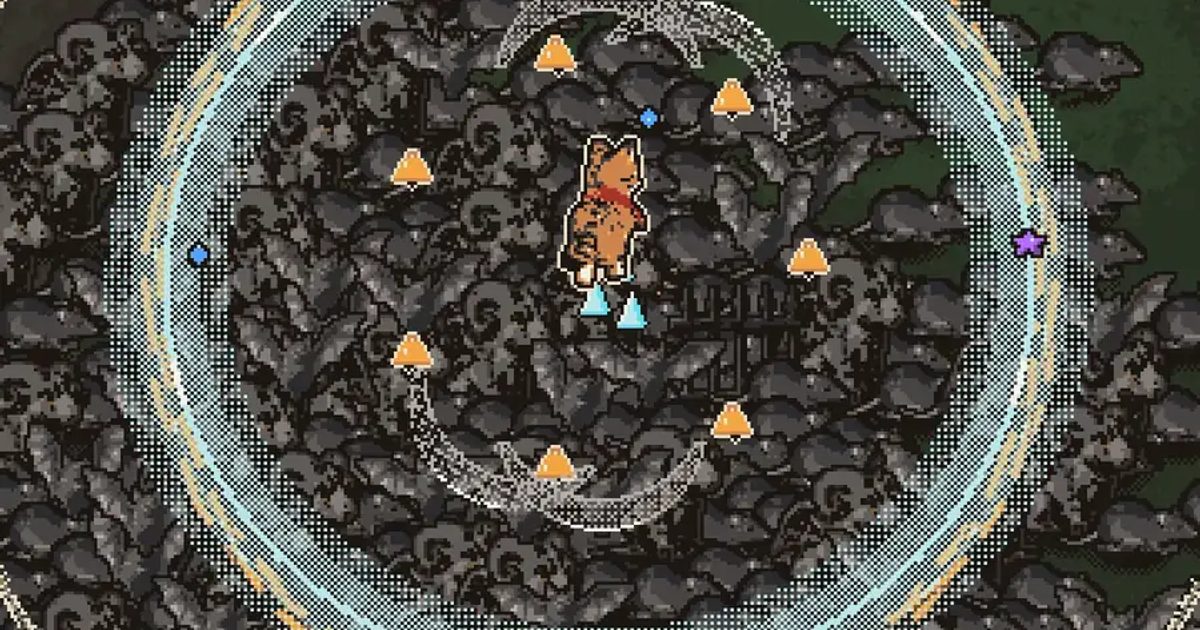
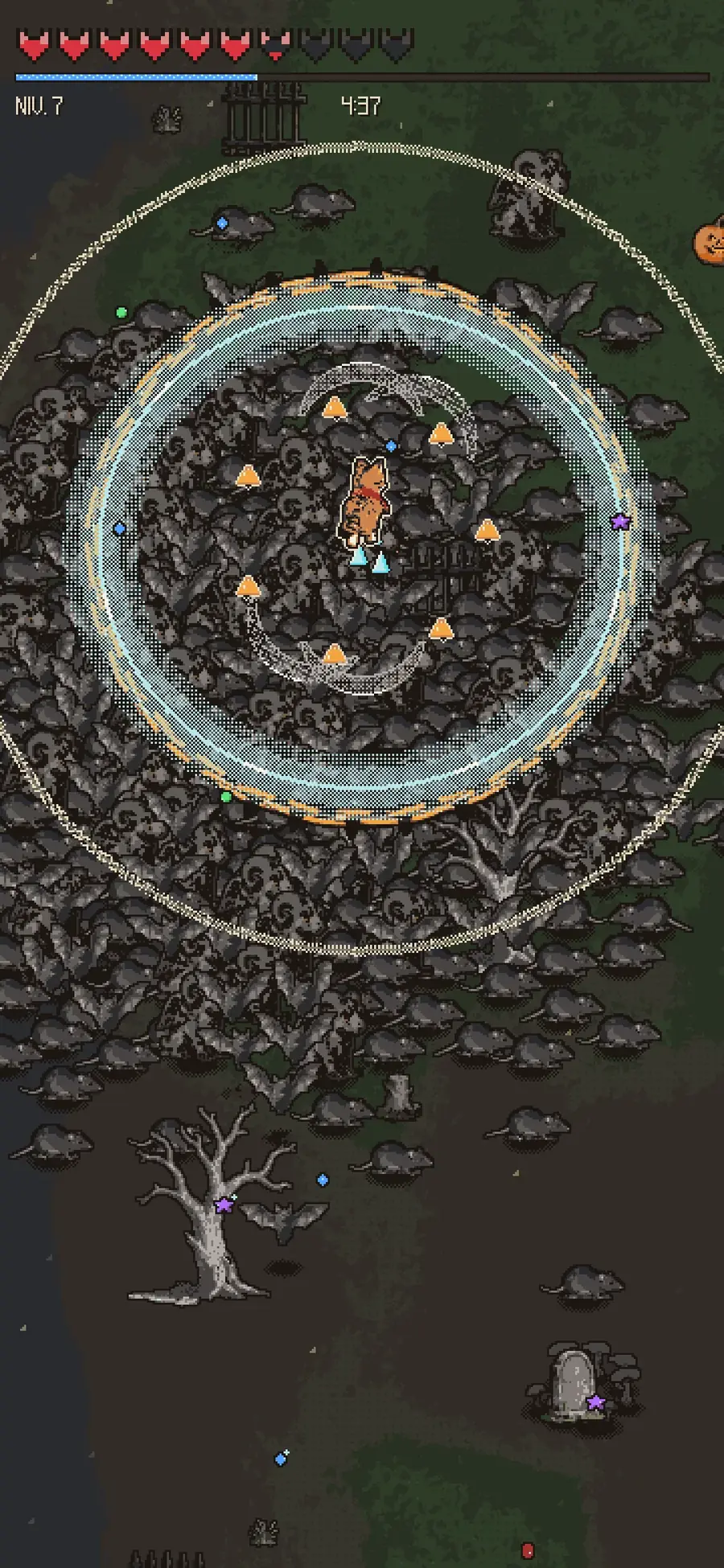
The first look did not work: no scenery, a flat background, characters seen from the front. Several attempts followed: a style guide with three directions (ink and newsprint, dark painting, a middle path), backgrounds redone because they leaned too green, cats redrawn several times, an engraving style. The style then changed direction again: the game moves to pixel art, decided on November 21, 2026.
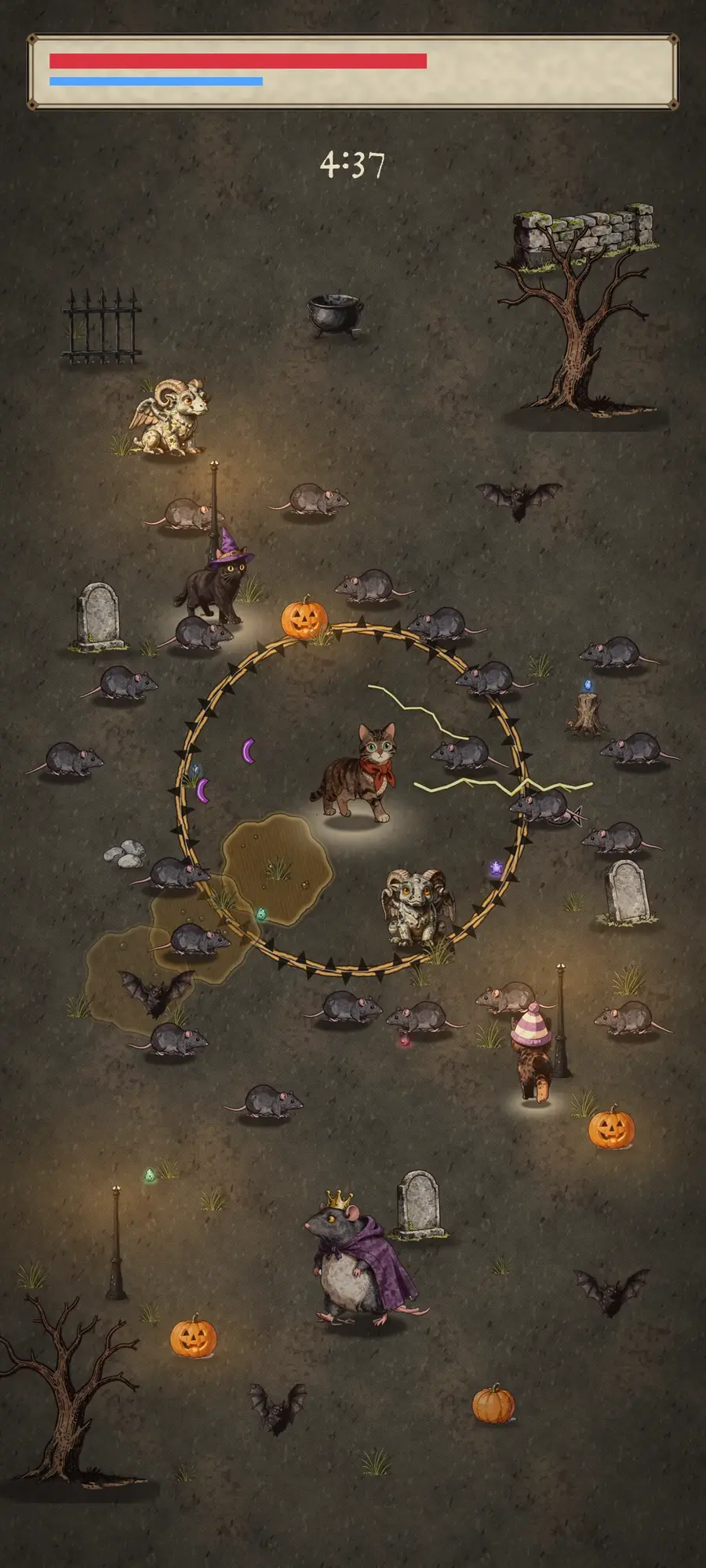
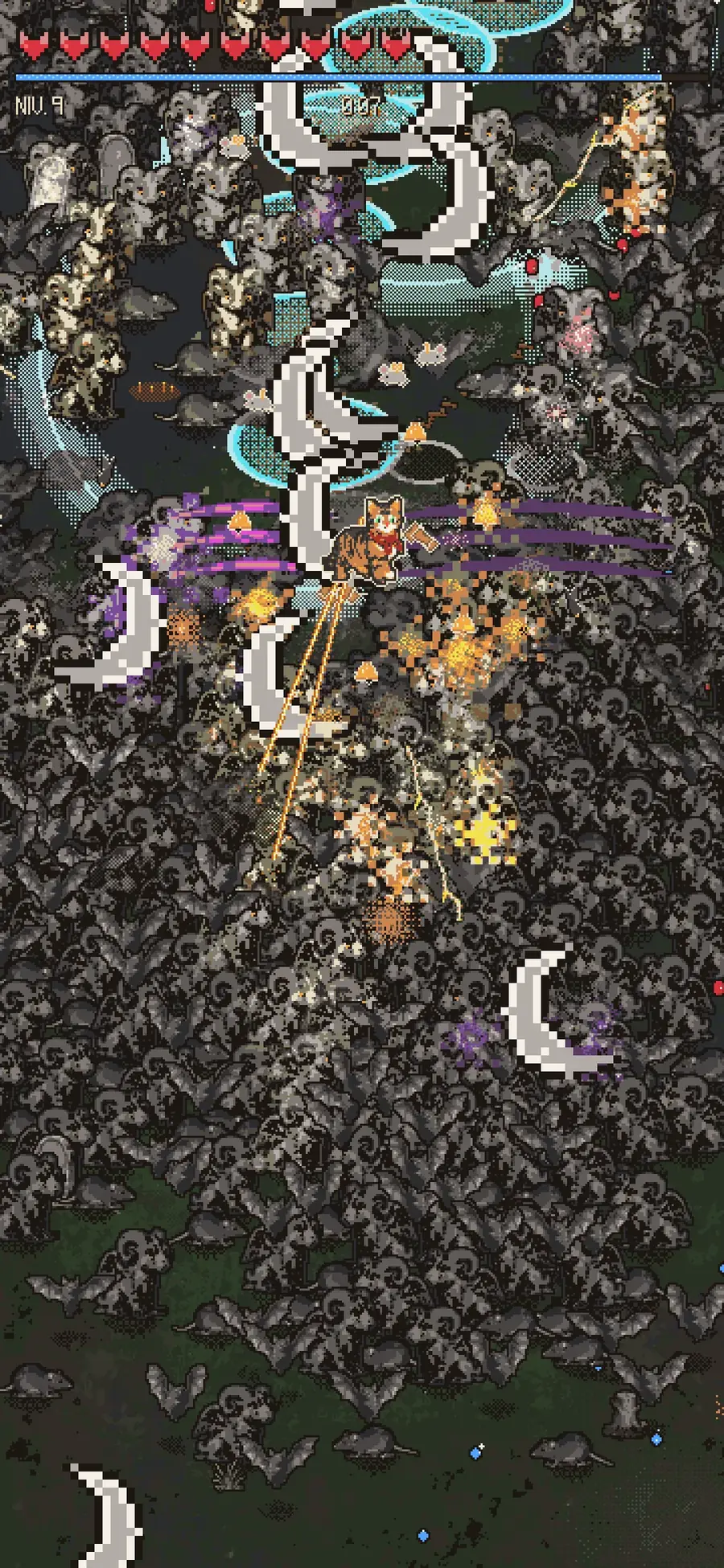
The image above shows the previous stage, the engraving style. The current pixel art is visible in the other two previews. Nothing is final: if the style changes again, these images will be replaced.
What we take from it: decide on a style early, test it on the moving game rather than on boards, and accept throwing work away.
Lesson 5: "explain nothing" has a limit
The initial idea was to explain nothing: no tutorial, no story, everything discovered by playing. After testing a full version on November 22, 2026, the feedback was simple: at least a description is needed to know what the spells do. The decision: still no tutorial and no story, but one line of description on every card and on every workshop purchase, planned for an upcoming version.
Where the game stands
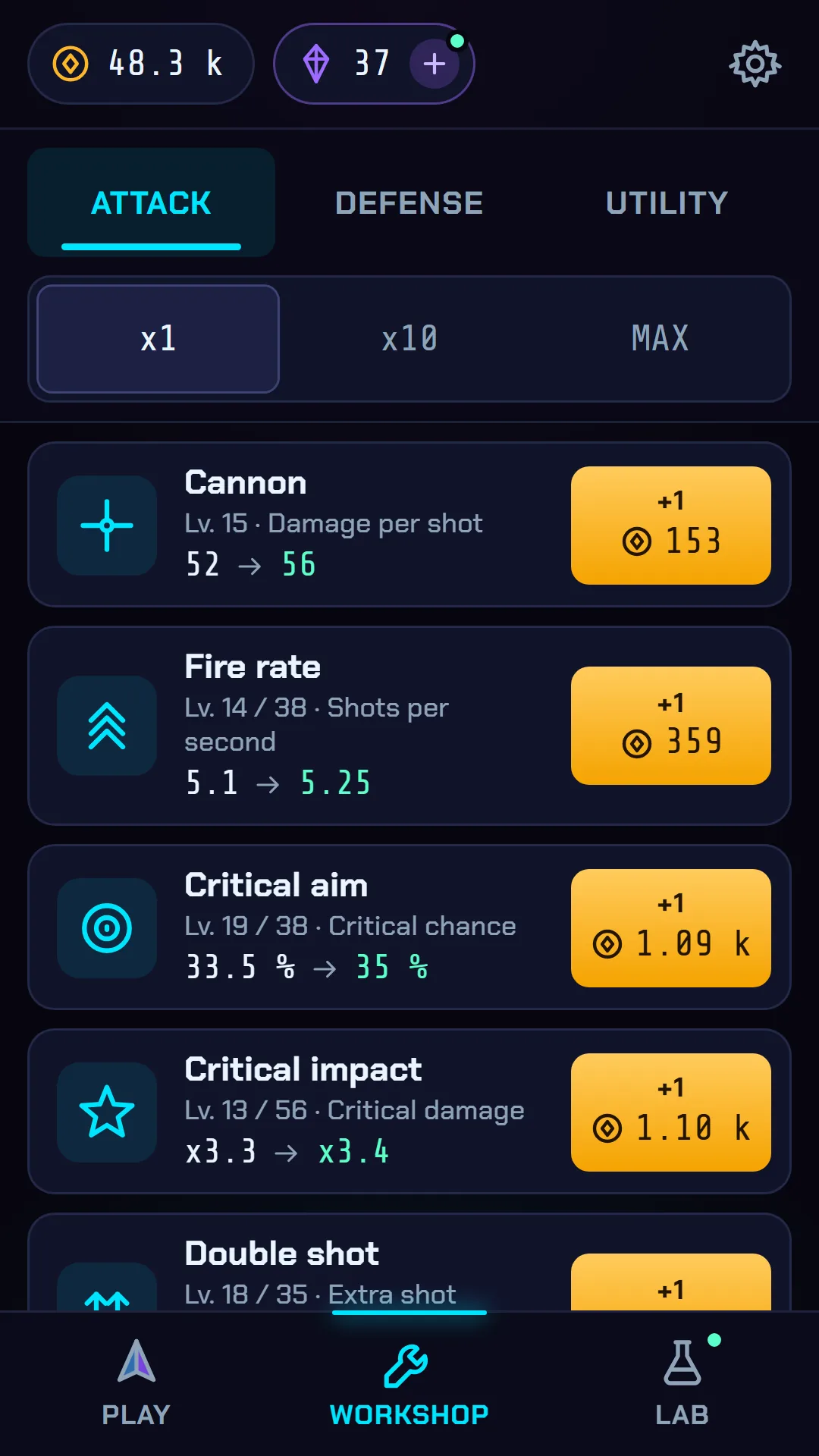
The November 22, 2026 test version (0.6.1) contains 21 spells and 12 spell fusions to discover, plus a workshop of permanent upgrades paid in kibble. At that date, a new batch of work was under way: destructible scenery, a cauldron, colors. The business model is not decided. The game targets Android first, in French and English.
What we do not have yet
No date, no name, no store page. Work-in-progress previews that are easy to replace, and this diary. We will extend it when something solid exists.