Software
The free tools of our indie studio and their licenses
The software, libraries, fonts and free resources Nyxfall Studio really uses to make its games, with their licenses where we know them.
Published on 3 min read
A small indie studio has no budget for expensive software, yet it still needs to know what it is allowed to do with each tool. Here is what Nyxfall Studio really uses, why, and the license when we have recorded it in our project registers. No price is stated here: publishers change their terms, so always check a tool's official page before relying on it.
This article is not legal advice. It draws on the license registers we keep in each project: a source is noted before it enters a game, and a license that forbids selling or that we could not read is dropped.
To make the games
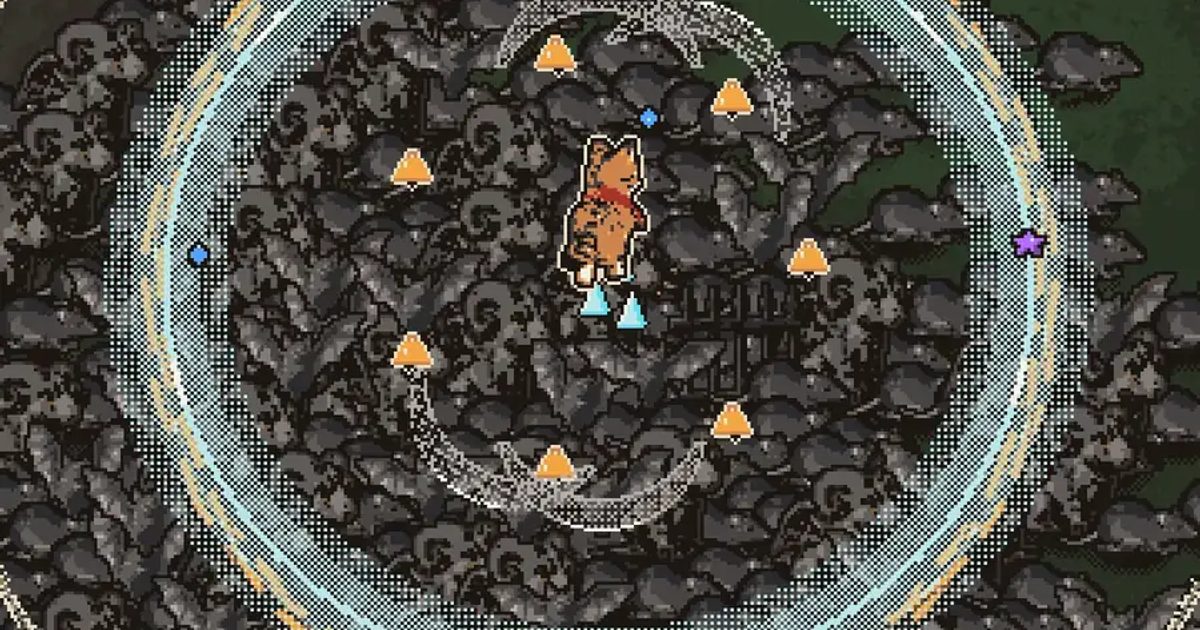
Unity 6, for our survival game
Our survival game (title to be announced) is made with Unity 6. We chose it because it is a very common engine on phones. We use the free license called Unity Personal; check the publisher's terms if your situation differs from ours.
HTML, CSS and JavaScript, for Prism Attack and Nyx Blocks
These two games are written in plain HTML, CSS and JavaScript, with no engine or third-party game library, and drawn by code on a 2D canvas. Sound effects are generated by code with the Web Audio API: no sound files. Upside: everything is light, readable and easy to test. Downside: no engine to help us, so a lot of hand work.
Capacitor 8, to turn them into Android apps
Capacitor wraps a web game into an Android app. It is MIT licensed, like the official modules we use (app, haptics, status bar, local notifications). An ads module (AdMob) is also MIT. A purchases module (@capgo/native-purchases) is MPL-2.0, used unmodified, and it bundles Google's Play Billing library, subject to Google's terms. AndroidX libraries are Apache 2.0.
Playwright, to test and capture
Playwright (Apache 2.0) drives a windowless browser to test the games and make the store screenshots. It is not shipped inside the apps.
Git, to keep the history
One repository per project, with regular commits, so that no step is ever lost. Nothing secret is stored in it.
Godot, for an older project
Our first game, now set aside, was made with Godot. We list it only to be complete: we have no license sheet to quote for it in the registers consulted for this article.
For images
Blender, Python and its libraries
Blender (GPL license for the program) was used to render images of cats, enemies and scenery. According to Blender's license page, the images produced belong to whoever makes them. Python is under the PSF license. Our assembly scripts rely on Pillow (MIT-CMU), numpy, scipy and scikit-image (BSD-3), OpenCV (Apache 2.0) and fontTools (MIT).
Free resources
We take free resources under CC0 (public domain): Kenney's Particle Pack, a paper texture from ambientCG (Paper006), light-flare effects, and a cat model by Quaternius that we examined and then dropped from the game (it did not fit the style). A CC-BY pack we looked at was not used.
For fonts
All the studio's fonts are under the SIL Open Font License (OFL):
- Prism Attack: Chakra Petch and Share Tech Mono.
- Our survival game: IM Fell English (titles) and Alegreya Sans (text), with a small derived work on the latter for numerals, renamed as the OFL requires when a font is modified.
- Nyx Blocks: no embedded font, it uses the phone's own.
The OFL allows including a font in a game that is sold, but forbids selling the font on its own. Keeping the license file next to the font is a good habit.
What is not free
To be honest, not everything is free. Publishing on Google Play requires a developer account, and it is paid. According to our preparation notes the amount is a one-time fee of 25 dollars, but check Google's page, which is authoritative.
Our license habits
- We note the license before downloading, not after.
- We drop what we cannot read or what forbids selling.
- We keep the license text next to the file.
- We prefer code and tools whose output we control, and accept writing things ourselves.
These are common-sense rules, not guarantees: a license should be reread, and it can change.